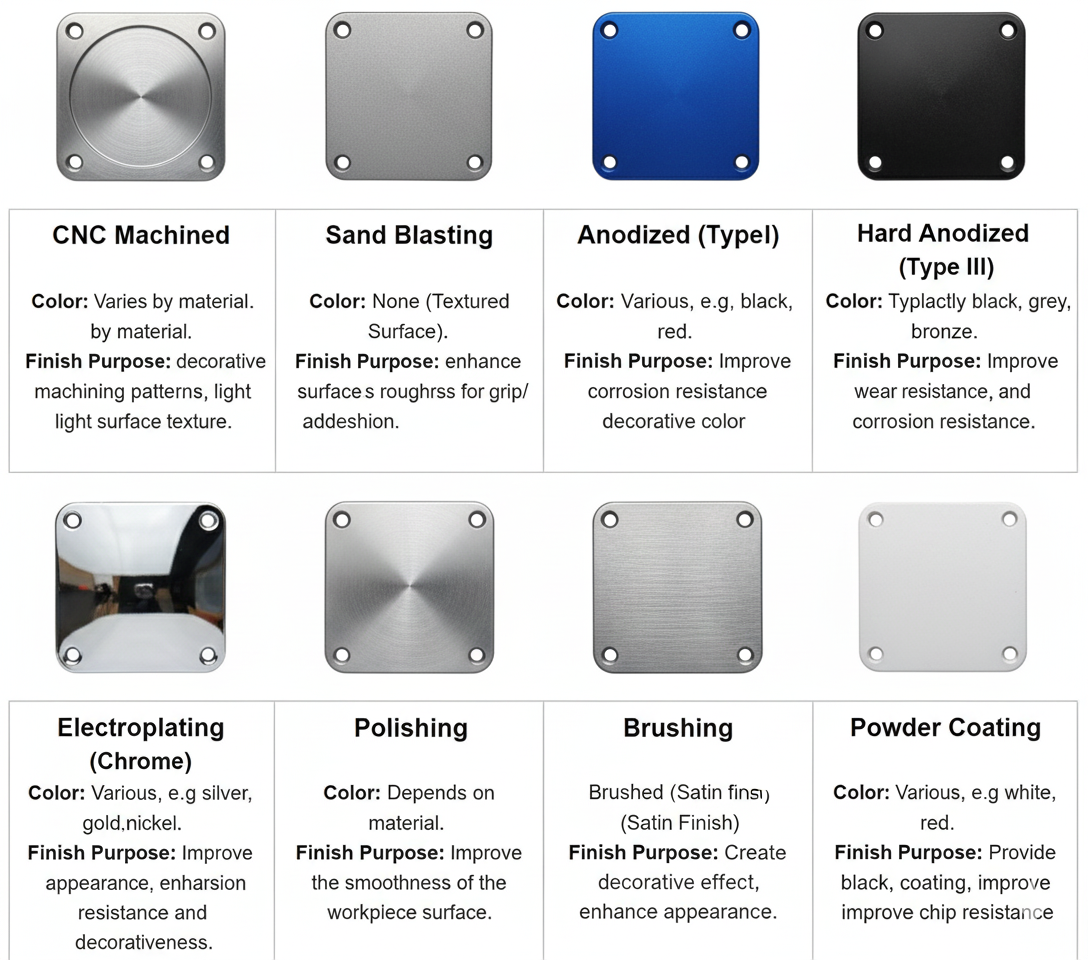
Surface Treatment Attribute Table
| Surface treatment type | CNC machined, sand blasting, anodized Type II, hard anodized Type III, electroplating chrome, polishing, brushing, powder coating |
|---|---|
| Suitable base materials | Aluminum, stainless steel, carbon steel, brass, copper, zinc alloy, and project-specific metals depending on finish |
| Color options | Natural metal, black, grey, blue, red, bronze, silver, gold, white, or customer-specified finish sample |
| Finish purpose | Improve appearance, corrosion resistance, wear resistance, grip, adhesion, surface texture, or product identification |
| Common applications | Precision CNC parts, visible hardware, product housings, knobs, brackets, automotive parts, drone parts, and consumer product components |
| Buyer confirmation needed | Base material, target color, gloss level, texture, masking area, threaded holes, and cosmetic acceptance standard |
| Inspection focus | Visual appearance, color consistency, coating coverage, edge quality, and functional dimensions after finishing |
| Sample approval | Finish samples can be reviewed before batch production when color or appearance is critical |
CNC Machined
Visible tool patterns and light surface texture for machined metal parts.
Sand Blasting
Matte textured surface to improve appearance and coating adhesion.
Anodized Type II
Decorative aluminum finish with color and corrosion-resistance options.
Hard Anodized Type III
Wear-resistant anodized surface for demanding aluminum parts.
Electroplating
Chrome, nickel, zinc, or other plating options depending on material and use.
Polishing
Improves smoothness and appearance for visible product surfaces.
Brushing
Creates a satin linear texture for decorative metal surfaces.
Powder Coating
Durable color coating for metal parts and product housings.
Finish Selection Notes
- Surface treatment depends on base material, geometry, masking area, hole size, thread requirements, and visual standard.
- For color-critical parts, provide a sample, Pantone/RAL reference, or previous production photo when possible.
- For functional surfaces, mark sealing areas, sliding areas, electrical contact areas, and surfaces that cannot be coated.