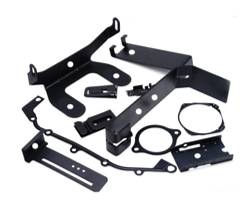
Use this page as a simple purchasing checklist before sending drawings for quotation. The goal is to reduce unclear requirements and make supplier comparison easier.
Key Points
- Confirm material, thickness, bend direction, holes, countersinks, and welding notes.
- Surface treatment and packing should be defined before quotation, especially for visible parts.
- For assemblies, send exploded drawings or photos showing how parts fit together.
What must be controlled before a sheet metal RFQ is sent?
Before a sheet metal RFQ is released, identify one active part and drawing revision, assign a role to each 2D, 3D, flat-pattern and BOM file, and state the quoted process boundary. Record material, thickness, finish, inspection, packaging and every unresolved assumption so suppliers can answer against the same controlled scope.
| Part and revision | Buyer input: part number, active drawing/model revision, units and RFQ date. Written confirmation: exact revision and quantity basis used for the quote. |
|---|---|
| File roles | Buyer input: state what the 2D drawing, 3D model, DXF/DWG flat file and BOM each control. Written confirmation: conflicts, missing files and the definition used for pricing. |
| Material and thickness | Buyer input: grade, condition, sheet thickness and whether alternatives require approval. Written confirmation: quoted material basis and any proposed substitution. |
| Fabrication scope | Buyer input: cutting, forming, welding, joining, hardware and assembly boundaries. Written confirmation: included, excluded, buyer-supplied and externally sourced steps. |
| Finish and masking | Buyer input: finish specification, visible faces, color or appearance reference, masking and protected areas. Written confirmation: included finish scope and unresolved appearance questions. |
| Inspection and acceptance | Buyer input: critical features, datums, fit checks and requested records. Written confirmation: checks and records included in the quotation. |
| Packaging and destination | Buyer input: surface protection, part separation, labeling, pack quantity and destination. Written confirmation: quoted packing basis and freight boundary. |
| Open questions and assumptions | Buyer input: list every decision that is not released. Written confirmation: assumption owner, due date and whether the answer changes the quote. |
How should unresolved RFQ items be labelled?
- Released requirement: approved in the controlling drawing, specification or purchase document.
- Supplier to confirm: a file conflict, process choice or scope boundary that needs a written answer.
- Buyer decision pending: an item that is not production authority and should not be priced as a confirmed requirement.
A blank field is an open item, not evidence that work is included. Review custom sheet metal fabrication scope, define finish requirements, align inspection acceptance evidence, and use the separate guide to compare returned supplier quotes.
The RFQ page prepares a WhatsApp message. Files stay on your device and must be attached and sent in WhatsApp separately. Opening the page, selecting files or opening WhatsApp does not confirm delivery or an inquiry.
Why buyers check this before ordering
Custom metal parts are usually not quoted correctly from a product name alone. The supplier needs to understand the drawing, tolerance level, material grade, finish, quantity, and the part's real application. When these details are clear, quotation is faster and production risk is lower.
For early projects, the best approach is to send enough information for an engineering review, then let the supplier confirm manufacturing questions before price discussion. This protects both sides from hidden cost, wrong finish, missing dimensions, or packing issues.
Buyer Decision Snapshot
| Fabrication definition | Thickness, bend direction, radius, welds, inserts, finish, and flatness need to agree with the final assembly. |
|---|---|
| Evidence to request | Clarified drawing questions, material and finish confirmation, sample approval approach, and inspection records appropriate to the part. |
Fast RFQ Checklist
| Technical files | CAD model, 2D drawing, photos, sample references, or assembly images. |
|---|---|
| Part requirements | Material, tolerance, surface finish, quantity, application, and inspection expectations. |
| Buyer notes | Target market, packaging, shipment timing, and any product development or assembly needs. |
| Supplier questions | Ask how the supplier reviews drawings, confirms critical dimensions, controls finish, and handles sample approval before batch production. |
Common mistakes to avoid
- Sending only a photo when the part requires tight dimensions or assembly fit.
- Using tight tolerances on every dimension instead of only critical areas.
- Leaving surface finish, masking, thread protection, or packaging requirements until after quotation.
FAQ
| Can Hasun quote without a 3D model? | Yes, but a 3D model plus 2D drawing is better for complex CNC parts. Photos or samples can help when the project is still early. |
|---|---|
| What makes the quotation faster? | Clear material, finish, quantity, key dimensions, application, and inspection requirements reduce back-and-forth. |
| Can this support prototype and batch orders? | Yes. RFQ details should explain whether the project is for prototype validation, pilot run, or repeat batch production. |
Need a drawing review?
Send your files and Hasun will check the manufacturability and quotation details.
Upload Drawings for RFQ